
Journal / Search & AI
AI Can Make You an Image. It Can't Make You Proof.
You can generate a brand photo right now for less than what you spend on coffee in a week.
Type a sentence. Get a clean, well-lit, professional-looking image of a person who does not exist, holding a product that has never been manufactured, standing in a building nobody has ever walked into.
Let me say the part most photographers won’t: a lot of them look really good.
I’m not going to insult you by pretending the technology is bad. It isn’t. It got good fast, it’s getting better, and anybody telling you it looks obviously fake is describing last year.
So let’s skip that argument entirely and have the one that actually matters to your business.
A photo of your business isn’t decoration. It’s evidence.
Every image you put on your site is making a claim.
This is our shop. This is our team. This is what you get when you order it. This is what it feels like to walk in here.
That is what a photograph has always been for commercially. Not “look how pretty.” Look, here it is, it’s real, we exist, this is what you’re buying.
A generated image cannot make that claim. It can make something that looks like that claim, which is a very different product, and the gap between those two things is where your customer’s trust lives.
Here’s our line, and it doesn’t move
We do not generate people, products, or places. Ever. Not for a client, not for a portfolio, not for a mockup that “we’ll replace later.”
If it’s in your gallery, a camera was pointed at a real thing that was really there.
That’s it. That’s the whole rule. It’s short on purpose, because a rule with exceptions in it isn’t a rule, it’s a preference.
And here’s what we absolutely do use AI for
I want to be equally specific about this half, because “we don’t use AI” would be a lie and the vague version of this promise is how people get misled.
We use it constantly. Just never on the content of an image.
- Cleanup on real frames. Denoise, upscale, sharpening, retouching. That’s a real photograph getting cleaned up. Same job a darkroom did, faster.
- Research. Competitive analysis, search data, and AI-visibility work on our brand audits.
- Operations. Scheduling, follow-up, transcription, project management, keeping the CRM honest.
I wrote out that entire stack in public, including the tools and the parts I’m bad at, over on gaberene.com. We’re not being cagey about it. AI runs a meaningful chunk of how this studio operates.
It just doesn’t touch what’s inside the frame.
“But you’re a photographer. You use AI on photos.”
Yea. I do. Let’s go straight at the awkward one, because if I don’t say it somebody else will.
I run AI culling on every wedding. A wedding comes home as three to five thousand frames. Software makes the first pass, throwing out blinks, blurs, and the eleven near-identical shots of one moment. Then I go through what’s left and pick.
I do not let it edit. That is a line I drew for myself before anybody asked me to. The look of our work comes from presets I built over years, applied by hand, image by image. Culling is a chore and I’ll hand a chore to a machine. The edit is the signature, and I’m not outsourcing a signature.
We do run AI cleanup in post. Noise reduction, sharpening, upscaling, retouching.
So how is that different from generating an image? Two tests, and I’ll be honest that the second one is where the judgment lives.
Test one: did a camera record it, or did a model invent it?
Culling sorts real frames. Cleanup and color work on a real RAW file. In every one of those cases the photograph already existed, made of light that hit a sensor in a room we were standing in. Nothing got conjured. That’s darkroom work with better tools, and photographers have been dodging, burning, and color correcting for a hundred years.
Generating starts from nothing. No room, no camera, no people. There is no “the photo” to work on, because there was never a photo.
Test two: does the edit change what’s true about your business?
Retouching a blemish, pulling a stray exit sign out of a corner, evening out sweat on a groom in a Texas July. None of that changes a single claim your marketing is making.
Adding a feature your product does not have, a crowd to a room that was empty, or a building you do not operate absolutely does.
That’s the line. Not “is AI involved,” which is a useless question in 2026. The question is whether the file is still telling the truth about you.
If a tool ever fails either test, we don’t use it. That’s why the rule up top has no exceptions in it: the exceptions are already handled by asking the right question.
Why this is a business argument, not an art argument
I don’t care about the philosophy of it. You’re running a company. So here’s the commercial case, three parts.
1. When everyone can make a good-looking image, good-looking stops meaning anything
Right now a polished photo still signals something to a customer. It says this company invested, this company is established, somebody here gives a damn.
That signal works because it used to be expensive and hard.
When any competitor can produce the same polish for a subscription fee, the signal dies. Polish becomes free, and free things don’t differentiate anybody.
What becomes scarce at that exact moment is the thing that was never generatable: proof that you actually exist, at a real address, with real people, doing the real thing.
Scarcity flipped. Most businesses haven’t noticed yet.
2. You will look exactly like your competitors, again
We already wrote about how your brand photos look like everyone else’s. Generated imagery makes that dramatically worse, not better.
These models are trained on the same data and pulled toward the same center. Everybody in your category typing similar prompts gets similar output. Same lighting, same faces, same slightly-too-perfect surfaces, same feel.
You’re not standing out. You’re buying into the most crowded aesthetic that has ever existed, and every one of your competitors has the same access to it.
Go pull up seven businesses in your category in twelve months. You’ll see it immediately.
3. Getting caught costs more than the shoot would have
Your customers are getting better at spotting this. Fast. And the reaction is never neutral.
Nobody looks at a generated team photo and thinks “efficient use of resources.” They think: what else on this site is bullshit?
And if the generated image shows a feature your product doesn’t have, or a facility you don’t operate, that’s not a styling choice anymore. That’s your marketing saying something untrue about what you sell. Whatever else that is, it’s a bad way to meet a customer.
One shoot is cheaper than one round of that.
Where AI genuinely belongs in your marketing
I’m not telling you to avoid it. I’m telling you to put it where it works.
Use it for the words you’re rewriting for the fifth time. Use it for research, for outlines, for sorting your customer feedback, for figuring out what people are actually searching. Use it to clean up and organize the mess in your operations, which is exactly what we do.
Use it on everything around the proof.
Just don’t use it to manufacture the proof itself. That’s the one thing in your whole marketing stack that has to be real, because it’s the only thing doing the job of being real.
What this means if you hire us
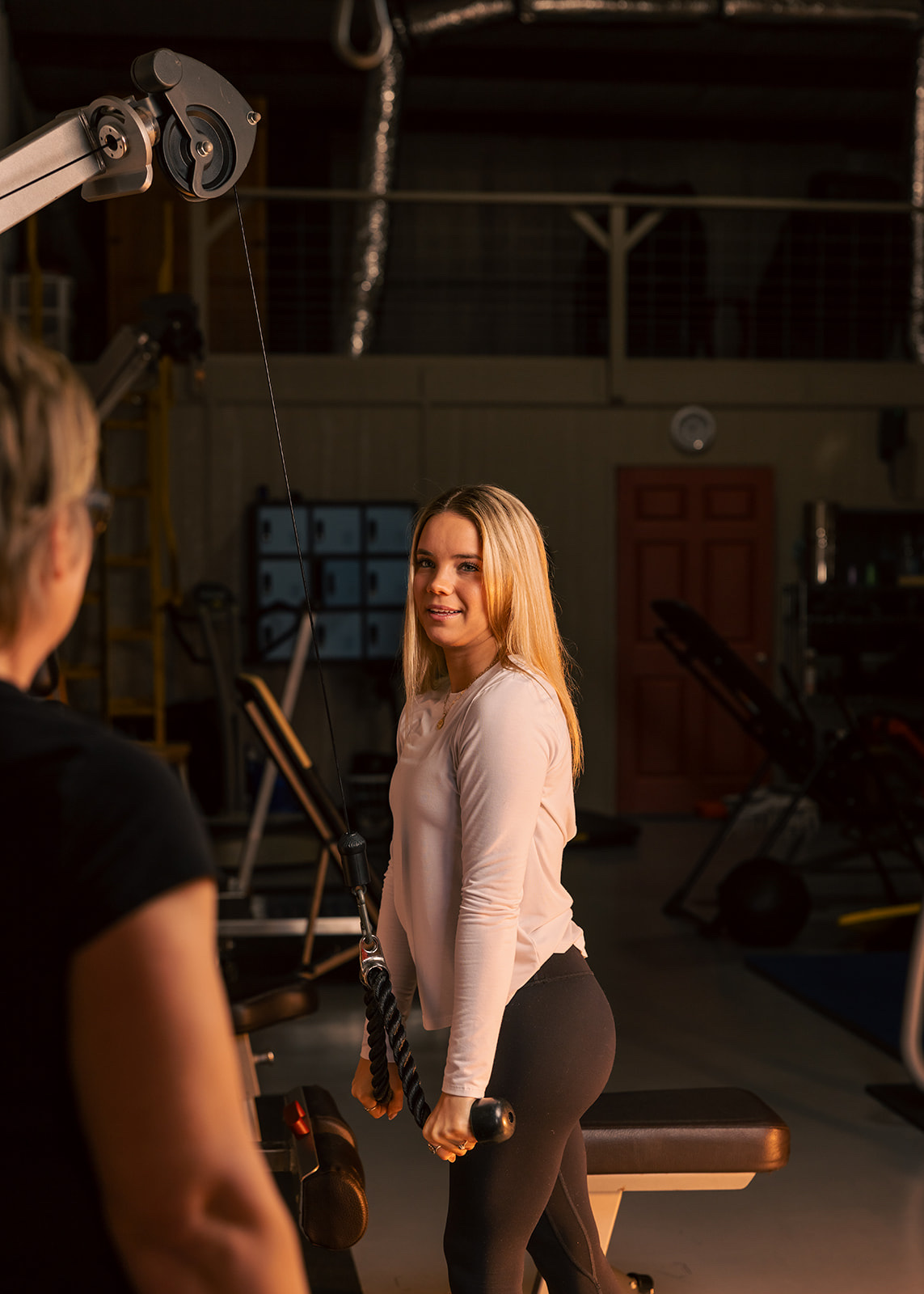
You get photographs of your actual people, in your actual space, doing the actual work.
Some of them will have a real person in them who has a real face that a model didn’t average into existence. The light will be the light that was in the room that day, because we were in the room that day.
That’s not us being precious about craft. It’s us handing you the one asset your competitors cannot type into a box.
Your photos are the only part of your marketing that can prove you’re real.
Don’t outsource that to something that has never been anywhere.
Gabe Rene
Gabe Rene LLC | GR Studio & Co. / 210.802.6055 / grstudioco.com
Keep reading
08.2026
Logo or Website First? Neither.
The logo vs website question has a third answer nobody sells you, because there is no invoice attached to it. Here is …
Read it08.2026
What to Do Before You Open a Business, In the Order That Actually Matters
Most new businesses do the right things in the wrong order and pay for it twice. Here is the sequence that saves you …
Read it08.2026
Your Hobby Turned Into a Business and Nobody Told You
The side hustle started paying before you called it a business. Nothing about it was ever decided. Here is what to fix …
Read it